Introduction:
Choosing between full coverage and liability-only auto insurance is one of the most important financial decisions a car owner makes. Understanding what each option covers, how much it costs, and which one fits your situation can save you thousands of dollars in the long run. This guide will help you understand the difference between full coverage and liability insurance, so you can make an informed choice about your car insurance policy.What Is Liability Auto Insurance?
Liability auto insurance is the most basic and essential type of car insurance required in nearly every U.S. state. It protects other people and their property when you cause an accident. However, it does not cover damage to your own vehicle or injuries you sustain.What Liability Insurance Covers
- Bodily Injury Liability (BIL): Covers the medical expenses, lost wages, and legal fees of people injured in an accident you cause.
- Property Damage Liability (PDL): Covers the cost of repairs or replacement for vehicles or property damaged due to your fault.
What It Doesn’t Cover
- Your car’s repair costs.
- Your medical bills or your passengers’ medical bills.
- Damage from weather, theft, or vandalism.
What Is Full Coverage Auto Insurance?
Full coverage is not a single insurance type — it’s a bundle of coverages that go beyond basic liability. It protects both you and others, covering a wider range of incidents.What’s Included in Full Coverage?
- Liability Insurance: The same protection required by law.
- Collision Coverage: Pays for repairs or replacement of your vehicle after an accident — no matter who’s at fault.
- Comprehensive Coverage: Covers non-collision events like theft, vandalism, natural disasters, falling objects, and animal collisions.
Optional Add-Ons That Often Come with Full Coverage
- Uninsured/Underinsured Motorist (UM/UIM): Protects you if the other driver has little or no insurance.
- Personal Injury Protection (PIP) or Medical Payments (MedPay): Covers medical bills for you and your passengers.
- Roadside Assistance or Rental Car Reimbursement: Provides towing and temporary transportation after a covered incident.
Example:
If your car is damaged by hail or stolen from your driveway, **comprehensive coverage** pays for the repairs or replacement. If you collide with another car, **collision coverage** handles your damages after you pay your deductible.Key Differences Between Full Coverage and Liability Insurance
| Feature | Liability Insurance | Full Coverage Insurance |
|---|---|---|
|
Covers your car damage |
❌ No |
✅ Yes |
|
Covers other people’s property |
✅ Yes |
✅ Yes |
|
Covers theft, fire, or vandalism |
❌ No |
✅ Yes |
|
Required by law |
✅ Yes (most states) |
❌ No |
|
Cost |
💲 Less expensive |
💲💲 More expensive |
|
Recommended for |
Older or low-value cars |
New or financed cars |
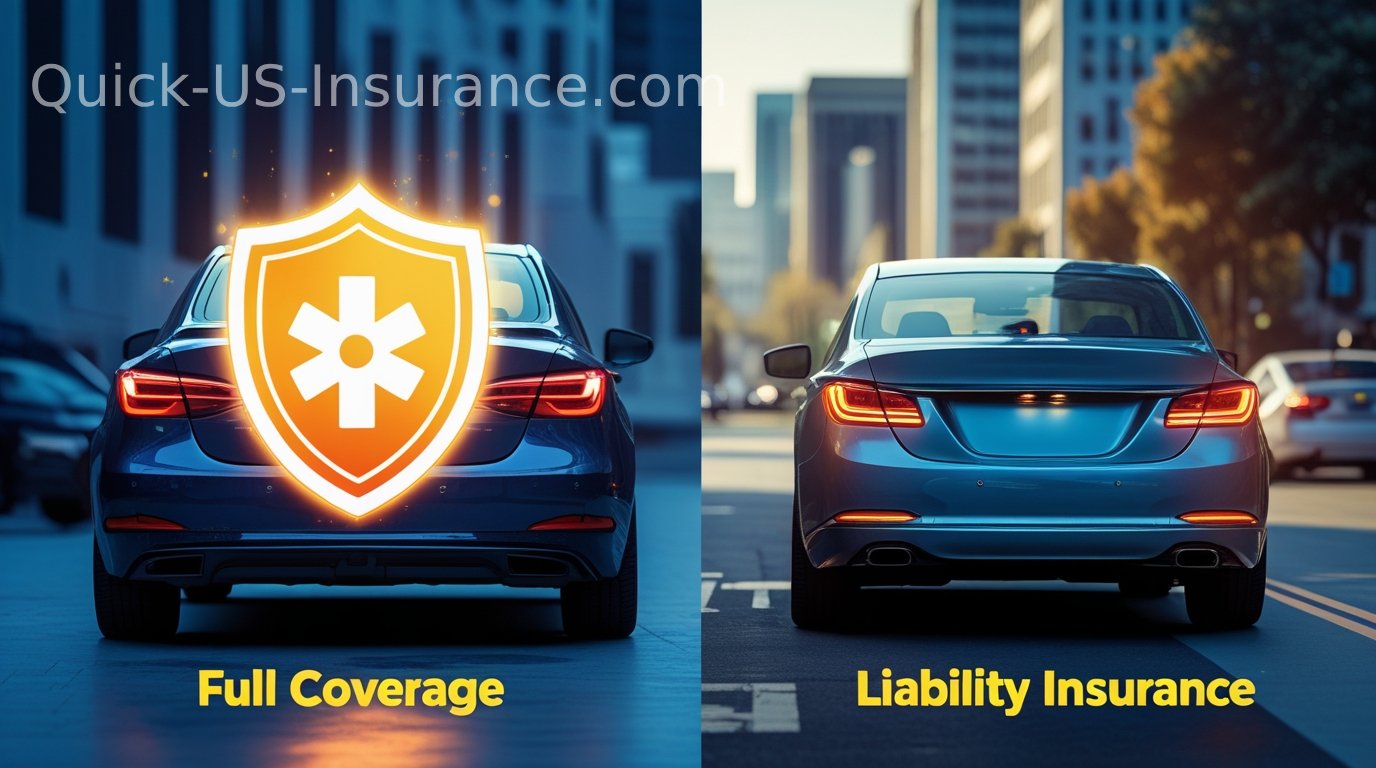
Liability insurance keeps you legal on the road, while full coverage provides complete protection for your car and finances.
Cost Comparison
The cost of auto insurance varies depending on factors like your age, driving history, vehicle type, and location. However, there’s a clear difference between liability and full coverage pricing.
- Average Annual Cost (Liability Only): $650 – $900
- Average Annual Cost (Full Coverage): $1,700 – $2,200
While full coverage can cost twice as much, the added protection is often worth it — especially for newer vehicles.
Why Full Coverage Costs More?
Full coverage includes protection for your own car, so insurers take on greater risk. This added security prevents you from paying thousands out of pocket after an accident, theft, or storm damage.
When to Choose Liability Insurance?
Liability-only insurance may be your best option if:
- Your car is **older or has a low market value** (under $5,000).
- You drive infrequently or use public transportation often.
- You can afford to repair or replace your car out of pocket.
- You want to meet your state’s minimum insurance requirements affordably.
Example: If your 12-year-old car is worth $3,000, paying $1,000 per year for full coverage doesn’t make financial sense. Liability-only coverage protects you legally without overspending.
When to Choose Full Coverage
Full coverage is strongly recommended if:
- You own a new or financed vehicle (lenders usually require it).
- You live in an area with high theft, vandalism, or natural disaster risk.
- You rely heavily on your car for commuting.
- You can’t afford unexpected out-of-pocket repair or replacement costs.
Example: If you recently financed a $25,000 vehicle, full coverage ensures your lender, and you are protected if the car is totaled or stolen.
Pros and Cons of Each
Liability Insurance Pros
✅ Meets state legal requirements.
✅ Lowest-cost option.
✅ Suitable for older vehicles.
Liability Insurance Cons
❌ Doesn’t protect your vehicle.
❌ No coverage for theft or weather damage.
❌ Risk of paying thousands in repairs personally.
Full Coverage Pros
✅ Covers both your car and others’.
✅ Includes theft, weather, and vandalism protection.
✅ Peace of mind for new or financed vehicles.
✅ May include rental and roadside assistance.
Full Coverage Cons
❌ More expensive premiums.
❌ Deductibles apply for collision/comprehensive claims.
❌ May not be cost-effective for older cars.
How to Decide Between the Two
Ask yourself these key questions:
- What is my car worth?
– If it’s worth less than 10 times your annual premium, liability-only might make sense. - Can I afford to replace my car if it’s totaled?
– If not, full coverage provides crucial financial protection. - Do I owe money on the car?
– Lenders require full coverage for financed or leased cars. - Where do I live?
– Urban and high-risk areas benefit from comprehensive coverage. - What’s my budget?
– Weigh the extra cost of full coverage against your comfort with potential loss.
How to Lower Your Premium (for Either Type)?
No matter which coverage you choose, there are ways to save money:
- Increase your deductible. A higher deductible lowers monthly premiums.
- Bundle insurance policies. Combine auto, home, or renters’ insurance for discounts.
- Maintain a clean driving record. Safe drivers earn better rates.
- Use telematics programs. Apps like Progressive Snapshot or Allstate Drivewise reward good driving habits.
- Ask about discounts. Many insurers offer savings for students, safe drivers, or low mileage.
- Compare quotes annually. Rates and discounts change over time.
Understanding State Liability Requirements
Each state sets its own minimum liability limits, typically expressed as three numbers:Bodily Injury per Person / Bodily Injury per Accident / Property Damage.
| State | Minimum Liability Limit |
|---|---|
|
California |
15/30/5 |
|
Texas |
30/60/25 |
|
Florida |
10/20/10 |
|
New York |
25/50/10 |
|
Illinois |
25/50/20 |
Meeting only the minimum may not be enough — experts recommend 100/300/50 coverage for better financial protection.
Conclusion
Understanding the difference between full coverage and liability insurance helps you make smarter financial choices.
If you have an older car and limited budget, liability-only coverage keeps you legal and affordable. But if your car is new, financed, or expensive to replace, full coverage is the safer investment.
The best approach is to review your policy annually, compare quotes, and adjust coverage as your car ages and your financial situation changes. With the right balance, you can stay protected without overpaying.