

Introduction:
Understanding health insurance programs in the United States can be challenging, especially when two government programs—Medicare and Medicaid—sound similar but serve very different purposes. Both help millions of Americans get affordable healthcare, but they differ in who qualifies, what they cover, and how they’re funded.
In this detailed guide, we’ll explore the key differences between Medicare and Medicaid, their eligibility rules, benefits, and how they work together for people who qualify for both.
What is Medicare?

Medicare is a federal health insurance program primarily designed for people aged 65 and older, though some younger individuals with disabilities or certain chronic conditions also qualify. It’s managed by the Centers for Medicare & Medicaid Services (CMS) and is the same across all U.S. states.
Who Qualifies for Medicare?
You’re eligible for Medicare if you:
- Are 65 years or older and a U.S. citizen or permanent resident.
- Have received Social Security Disability Insurance (SSDI) for at least 24 months.
- Have End-Stage Renal Disease (ESRD) or Amyotrophic Lateral Sclerosis (ALS).
The Four Parts of Medicare
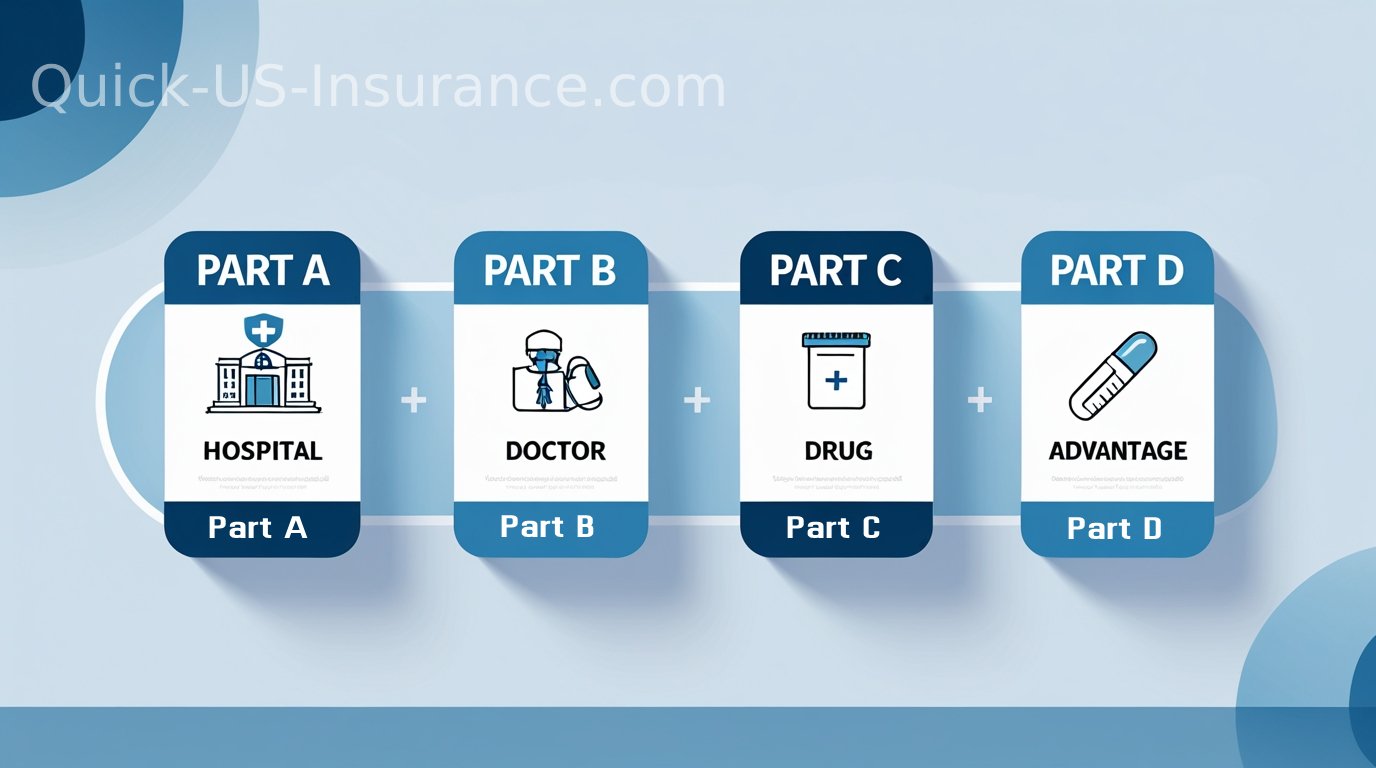
Medicare is divided into four parts that cover different healthcare needs:
- Part A (Hospital Insurance) – Covers inpatient hospital stays, skilled nursing facilities, hospice, and limited home health care. Most people don’t pay a premium if they or their spouse paid Medicare taxes while working.
- Part B (Medical Insurance) – Covers outpatient care, doctor visits, preventive services, and medical equipment. There’s a monthly premium for Part B, which may vary based on income.
- Part C (Medicare Advantage) – Offered by private insurance companies approved by Medicare, these plans bundle Parts A and B and often include prescription drugs, dental, and vision coverage.
- Part D (Prescription Drug Coverage) – Helps cover the cost of medications. You can purchase a Part D plan separately or through a Medicare Advantage plan.
What Medicare Covers?
- Hospital and inpatient services
- Outpatient care and preventive services
- Prescription medications (via Part D)
- Some home healthcare and durable medical equipment
What Medicare Does NOT Cover?
- Long-term care (nursing home stays)
- Most dental, vision, and hearing services
- Routine foot care or cosmetic procedures
What Is Medicaid?

Medicaid is a joint federal and state program that provides free or low-cost health coverage to low-income individuals and families. Unlike Medicare, eligibility and benefits vary by state.
Who Qualifies for Medicaid?
Medicaid is income-based. In general, you may qualify if you are:
- A low-income adult or child
- Pregnant
- A senior with limited income and resources
- A person with a disability
Eligibility depends on your household size and income level (usually under 138% of the federal poverty level in states that expanded Medicaid under the Affordable Care Act).
What Medicaid Covers?
Medicaid covers a wide range of services, including many not covered by Medicare:
- Hospital stays and doctor visits
- Prescription drugs
- Preventive care and immunizations
- Long-term care and nursing home services
- Mental health and substance abuse treatment
- Maternity and newborn care
What Medicaid Does NOT Cover?
Coverage gaps differ by state but may exclude:
- Cosmetic procedures
- Private-duty nursing in some states
- Certain dental or vision services for adults
Dual Eligibility: Getting Both Medicare and Medicaid

Some people qualify for both programs—these individuals are known as “dual eligibles.” They are typically seniors or individuals with disabilities who also have limited income.
How it Works?
- Medicare acts as the primary payer (pays first).
- Medicaid acts as the secondary payer (covers costs Medicare doesn’t, like premiums, deductibles, or long-term care).
Dual eligible individuals often have access to Special Needs Plans (SNPs)—Medicare Advantage plans specifically designed to coordinate both benefits.
Medicaid is generally cheaper, but Medicare provides more universal access regardless of income.
How to Apply?

1. For Medicare:
You can apply through the Social Security Administration (SSA) website at [ssa.gov/medicare](https://www.ssa.gov/medicare/). Enrollment usually begins three months before your 65th birthday.
2. For Medicaid
Applications are handled through your state’s Medicaid office or through the Health Insurance Marketplace at [HealthCare.gov](https://www.healthcare.gov/).
If you’re unsure whether you qualify, you can apply for both—your state agency will determine your eligibility automatically.
Choosing the Right Program
- If you’re over 65 or have a disability → Apply for Medicare.
- If you’re low-income (any age) → Apply for Medicaid.
If you’re low-income AND over 65 or disabled → You might qualify for both (dual eligibility).
When choosing between them, consider your healthcare needs, prescription drug use, and financial situation. Consulting a state health insurance assistance program (SHIP) can help you make the right choice.
Conclusions
While Medicare and Medicaid may sound similar, they serve very different populations and purposes. Medicare focuses on older adults and people with disabilities, while Medicaid provides vital coverage for low-income families and individuals.
Both programs are essential to the U.S. healthcare system, helping millions of Americans access doctors, hospitals, and medications they might otherwise not afford. Understanding how they work—and how they differ—ensures you can make informed decisions about your healthcare coverage and financial well-being.