

Introduction
The Affordable Care Act (ACA), also known as Obamacare, reshaped the U.S. healthcare system by making health insurance more accessible and affordable for millions of Americans. Since its introduction in 2010, the ACA has provided essential protections, expanded Medicaid, and introduced the Health Insurance Marketplace. In this guide, you’ll learn everything you need to know about the ACA—how it works, who qualifies, what’s covered, and how to enroll.What is the Affordable Care Act (ACA)?
 The Affordable Care Act was signed into law by President Barack Obama in March 2010. Its main goals are to:
- Make health insurance more affordable.
- Expand Medicaid coverage to more low-income adults.
- Support innovative medical care to reduce overall healthcare costs.
Key Features of the ACA
The ACA introduced several landmark changes to how health insurance works in the United States. Here are its most important provisions:-
Health Insurance Marketplace
 The ACA established the Health Insurance Marketplace (HealthCare.gov) where individuals and families can compare and purchase insurance plans. Many states also operate their own exchanges, like Covered California or New York State of Health.
Plans are categorized into four “metal” tiers: Bronze, Silver, Gold, and Platinum, which reflect how costs are shared between you and your insurer.
The ACA established the Health Insurance Marketplace (HealthCare.gov) where individuals and families can compare and purchase insurance plans. Many states also operate their own exchanges, like Covered California or New York State of Health.
Plans are categorized into four “metal” tiers: Bronze, Silver, Gold, and Platinum, which reflect how costs are shared between you and your insurer. -
Subsidies and Tax Credits
To make coverage affordable, the ACA provides two types of financial assistance:- Premium Tax Credits – Reduce your monthly insurance cost based on your income.
- Cost-Sharing Reductions (CSR) – Lower your deductibles, copays, and coinsurance if you qualify.
-
Medicaid Expansion
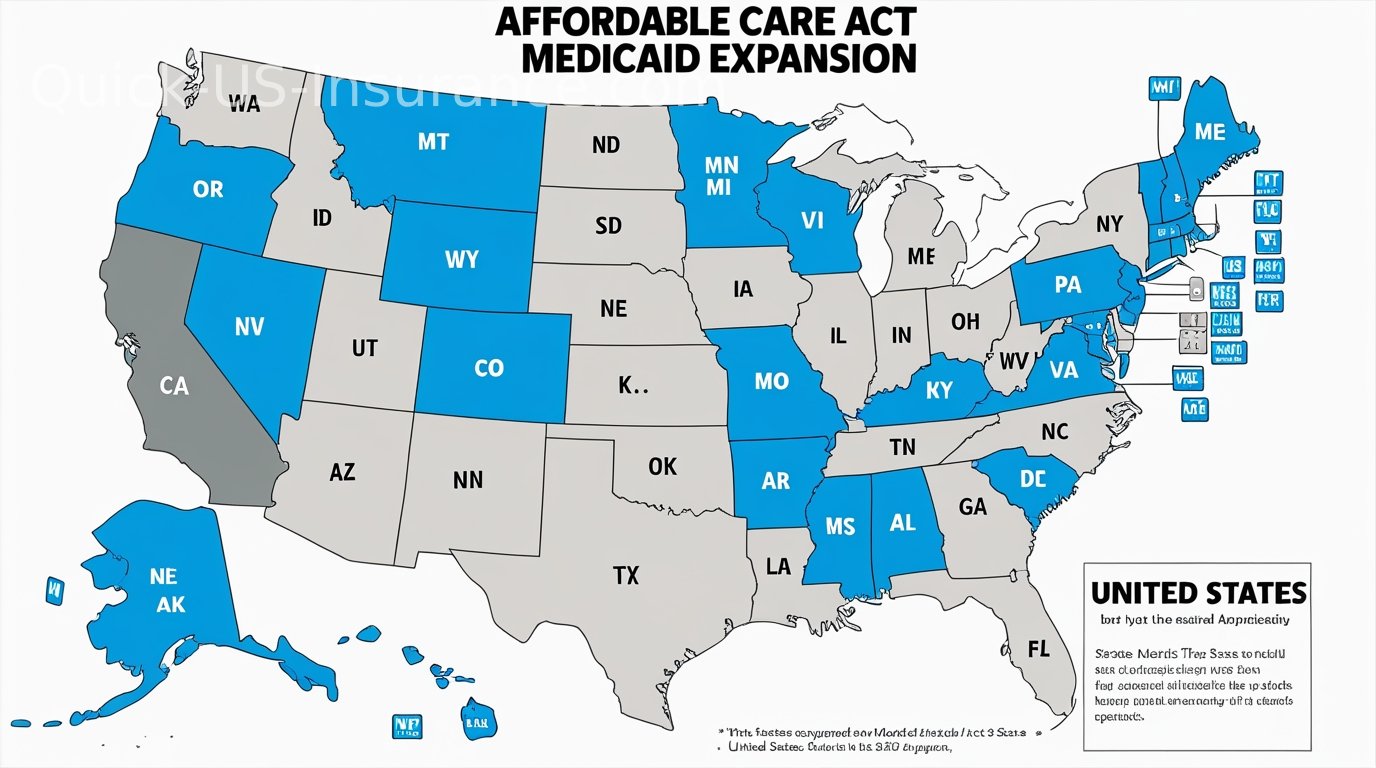 One of the ACA’s major achievements was expanding Medicaid eligibility. States that opted into expansion now cover individuals earning up to 138% of the FPL. This has provided insurance to millions of low-income adults who previously did not qualify.
 -
Preexisting Condition Protection
Before the ACA, insurance companies could deny coverage or charge higher premiums for people with preexisting medical conditions. The ACA banned this practice, ensuring everyone has access to coverage regardless of health status. -
Essential Health Benefits
All ACA-compliant plans must cover 10 essential health benefits, including:- Ambulatory (outpatient) services
- Emergency care
- Hospitalization
- Maternity and newborn care
- Mental health and substance use services
- Prescription drugs
- Rehabilitative and habilitative services
- Laboratory services
- Preventive and wellness services
- Pediatric services (including dental and vision for children)
-
Individual Mandate (Now Repealed)
Initially, the ACA required everyone to have health insurance or pay a tax penalty. However, this individual mandate was repealed at the federal level in 2019. Some states, like California, Massachusetts, and New Jersey, still have their own mandates. -
Young Adult Coverage
The ACA allows children to stay on their parents’ health insurance plan until age 26, even if they’re married or financially independent. -
Preventive Care Without Extra Cost
 All ACA plans must include preventive services (like annual checkups, vaccines, and screenings) at no additional cost to the insured.
*(These figures change annually based on federal updates.)*
How to Enroll in an ACA Plan?

You can enroll in an ACA health plan in three main ways:
- Online: Visit [HealthCare.gov](https://www.healthcare.gov) or your state marketplace.
- By Phone: Call the Marketplace Call Center (1-800-318-2596).
- Through an Agent or Broker: Licensed professionals can help you compare and enroll for free.
Enrollment Periods
- Open Enrollment: Typically runs from November 1 to January 15 each year.
- Special Enrollment: Available if you experience a qualifying life event such as losing job-based coverage, getting married, or having a baby.
Benefits of ACA Health Coverage
- Comprehensive coverage for essential services
- No discrimination based on preexisting conditions
- Access to preventive care at no cost
- Financial aid through tax credits and subsidies
- Standardized plans for easy comparison
Criticisms and Challenges
While the ACA improved access to healthcare, it also faced criticism over rising premiums and limited provider networks in some regions. Some insurers left state marketplaces early on, reducing competition. However, recent federal reforms and incentives have helped stabilize the system.
ACA vs. Non-ACA Health Plans
Tips for Choosing the Right ACA Plan
- Compare all available plans on HealthCare.gov or your state marketplace.
- Check your doctor’s network—make sure your providers are included.
- Estimate your annual healthcare usage to choose the right metal tier.
- See if you qualify for subsidies using the marketplace calculator.
- Review prescription coverage to ensure your medications are included.
The Future of the ACA

Despite political challenges, the ACA continues to be the backbone of the U.S. healthcare system. Federal and state governments are expanding access, increasing subsidies, and improving user experience through modernized enrollment platforms.
As of 2025, more than 40 million Americans are enrolled in ACA-related plans—proving its impact and staying power in shaping affordable healthcare.
Conclusions
The Affordable Care Act (Obamacare) remains a vital part of the American healthcare landscape. It ensures that millions of people—regardless of income, health, or employment status—can access comprehensive, affordable health coverage.
Whether you’re new to the marketplace or renewing an existing plan, understanding how the ACA works empowers you to make informed choices about your healthcare and financial well-being.